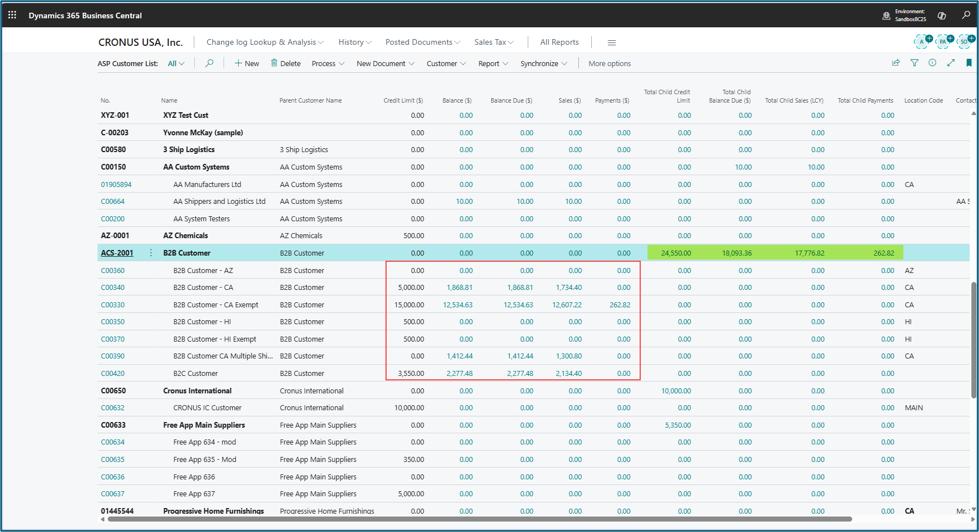
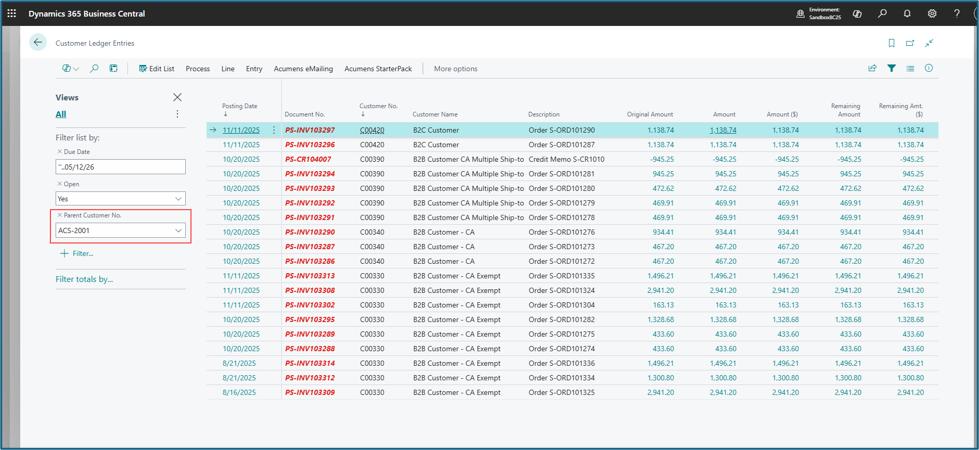
The Parent–Child Customer functionality in Business Central provides a structured way to manage customer relationships, consolidate financial data, and streamline billing across related customers.
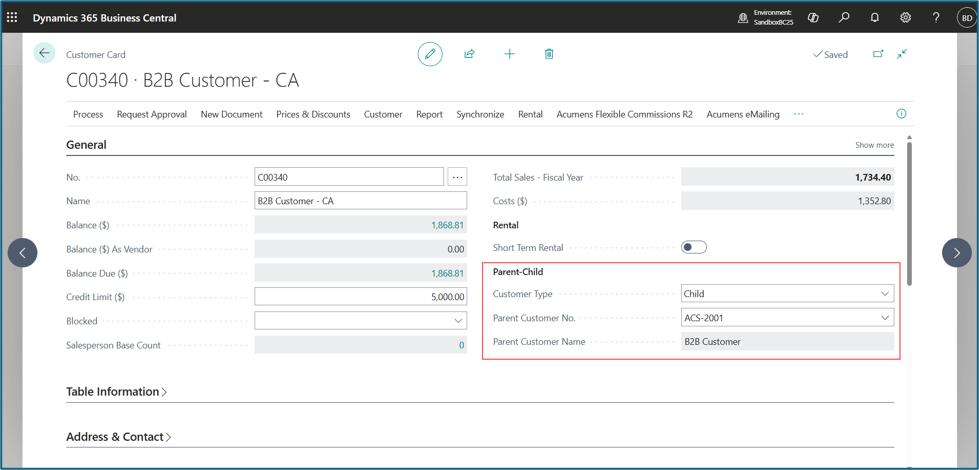
On Customer Card, a new Customer Type field is added. It allows specifying a customer as Parent or Child.
Parent Customer: A parent customer is main customer account with one or more subsidiary customers linked to it. It consolidates and displays aggregated statistics from the linked child customers. The parent customer can still be transacted with directly.
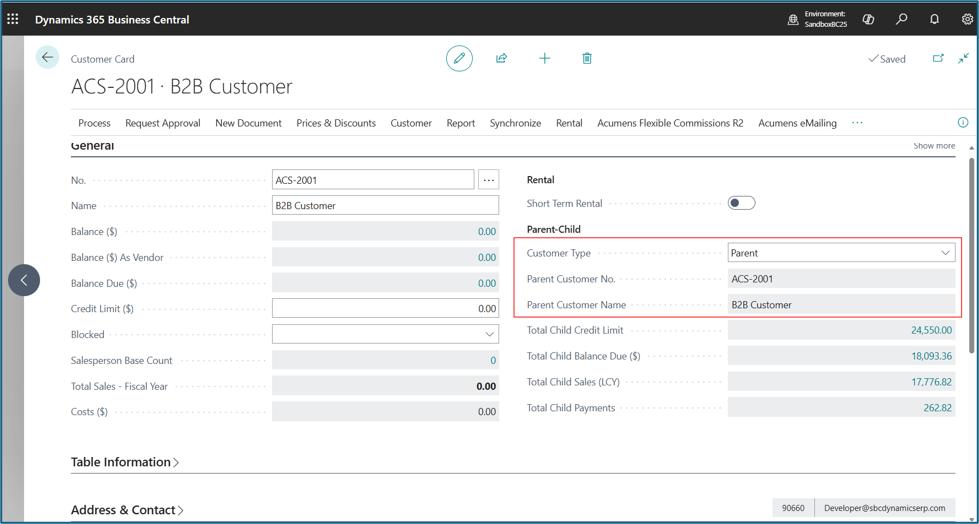
Parent customers automatically aggregate statistics from all linked children.
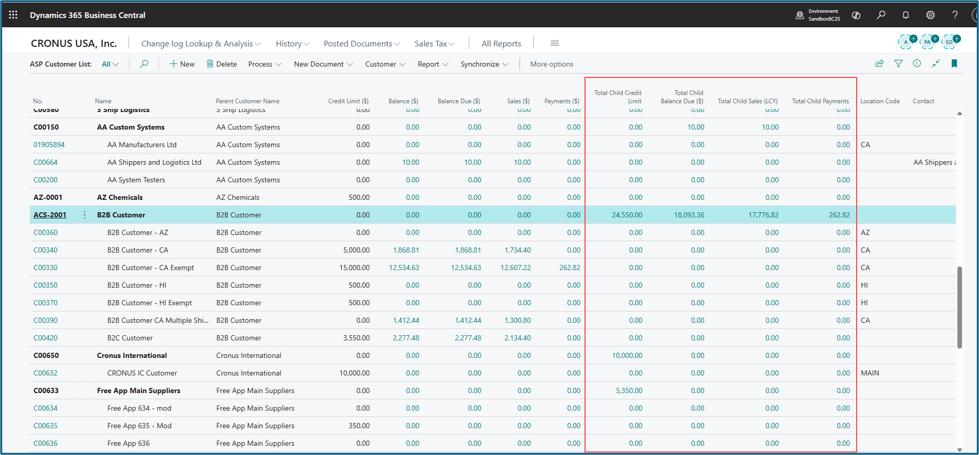
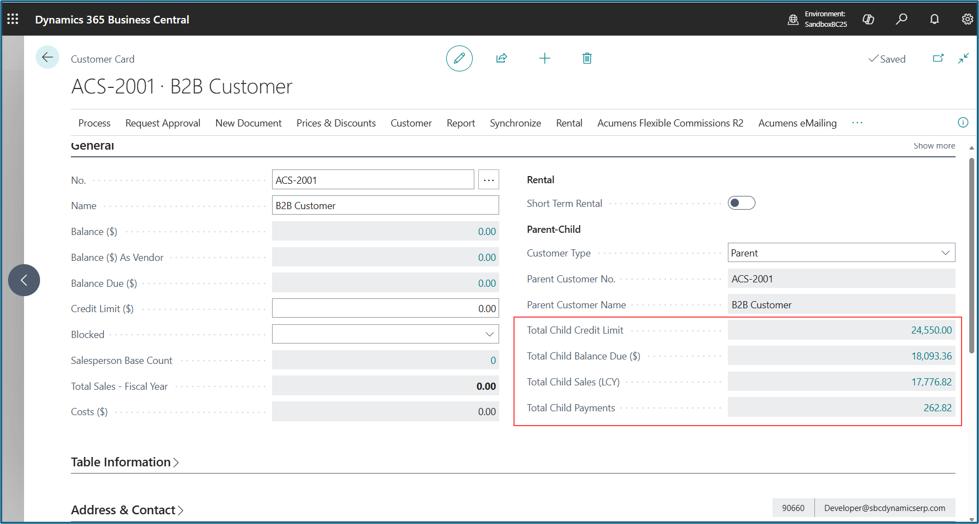
Child Customer: A child customer is the subsidiary or the related customer that is linked to the main customer. It operates independently and can be processed for transactions such as sales orders, shipments, and invoices.
Depending on the organizational setup, they can be shipped-to or sold-to directly, but billing can then be directed to the Parent customer as the Bill-to Account.
It is linked to the parent customer via Parent Customer No. field.
On the Customer List, the view provides a hierarchal view of the relationship. The parent customers are shown in bold while the child customers show under it.
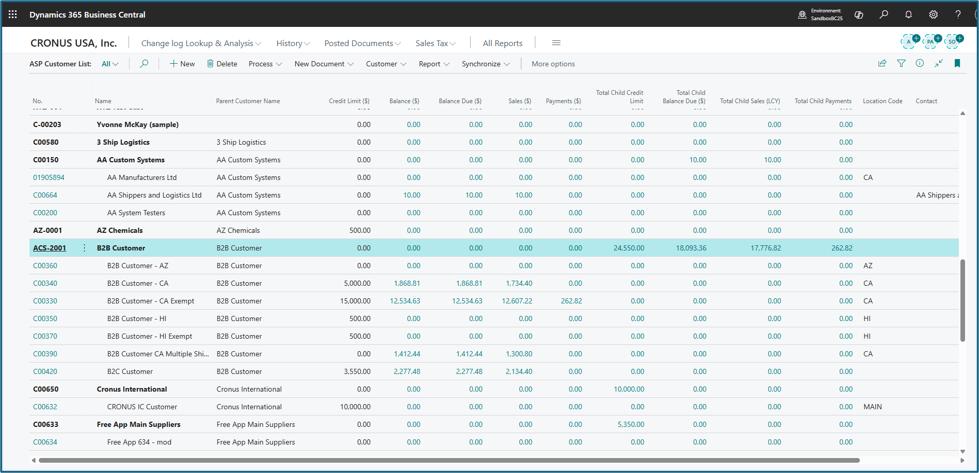
It is especially useful in a scenario where subsidiaries bill the main customer account.
Example, consider a corporate group which has multiple subsidiaries.
Sales & Shipments: Goods or services are shipped directly to subsidiaries. Each subsidiary then maintains its own operational records and invoices.
Billing: Invoices raised against subsidiaries can be billed to the Parent customer. The parent customer provides a view of the consolidated balances, payments, and credit exposure.
Credit Control: The main consolidated credit limit ensures group level monitoring. This can prevent overuse of credit across subsidiaries by aggregating exposure.
Reporting & Analysis: It provides group level statistics at the parent account and the individual activity at the child customer level. Since the fields are implemented as flow fields, the drill down provides possible to analyze subsidiary performance individually.